Five weeks · Small classes · Thornton
Puppy Kindergarten
Good manners, real-life skills, and a puppy who is glad to be learning.
Our curriculum focuses on the everyday skills that help puppies become enjoyable companions at home and in the community. Through fun, engaging lessons, you'll teach your puppy GOOD MANNERS while learning practical training techniques you can use for years to come. By keeping our class sizes small, you can expect to have personalized training for you and your puppy.
Our goal isn't simply to teach your puppy a few commands. We want to give you the knowledge and practical skills to continue training throughout your dog's life. The techniques you learn in class can be applied to everything from puppy biting and barking to greeting guests politely, prevent unwanted habits and developing lifelong good manners.
By the end of five weeks
The full curriculum, in the order we build it.

Name recognition
Your puppy's name should mean "something good is about to happen," not "you are in trouble." Everything else is built on this.

Sit
Reliable the first time you ask, and without a treat visible in your hand.

Stay
Built up gently, seconds first, then distance, then distraction, so it truly lasts.

Down
The settle that makes a quiet evening, a vet visit, and a patio possible.

Loose leash walking
A walk you both look forward to, with slack in the leash and nobody being dragged.

No jumping
Four paws on the floor when someone comes through the door, taught as a default, not corrected in the moment.

Recall (coming when called)
The skill that keeps a dog safe for life. We build it so it works when it matters.

Confidence around new experiences
Meeting new surfaces, sounds, people and dogs calmly and happily.

Place, go to mat (or bed)
A spot of their own to settle on, so doorbells, dinners and visitors get easier.
Wait
A calm pause at doors, food bowls and curbs, until you say go.
Leave it
Walking past the dropped sandwich, the trash, and the mystery thing on the sidewalk.

Drop it
Giving things up happily when asked. No chasing, no tug-of-war over your shoe.
What class looks like
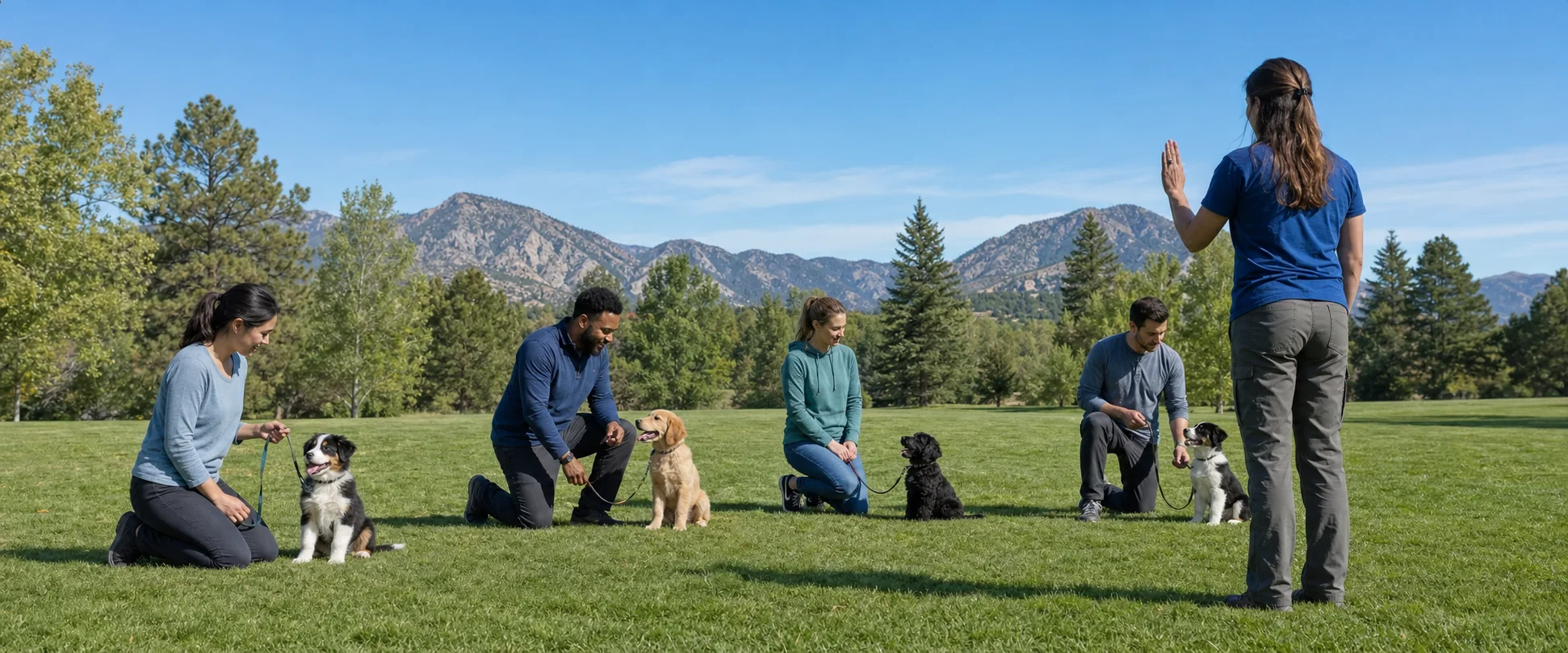
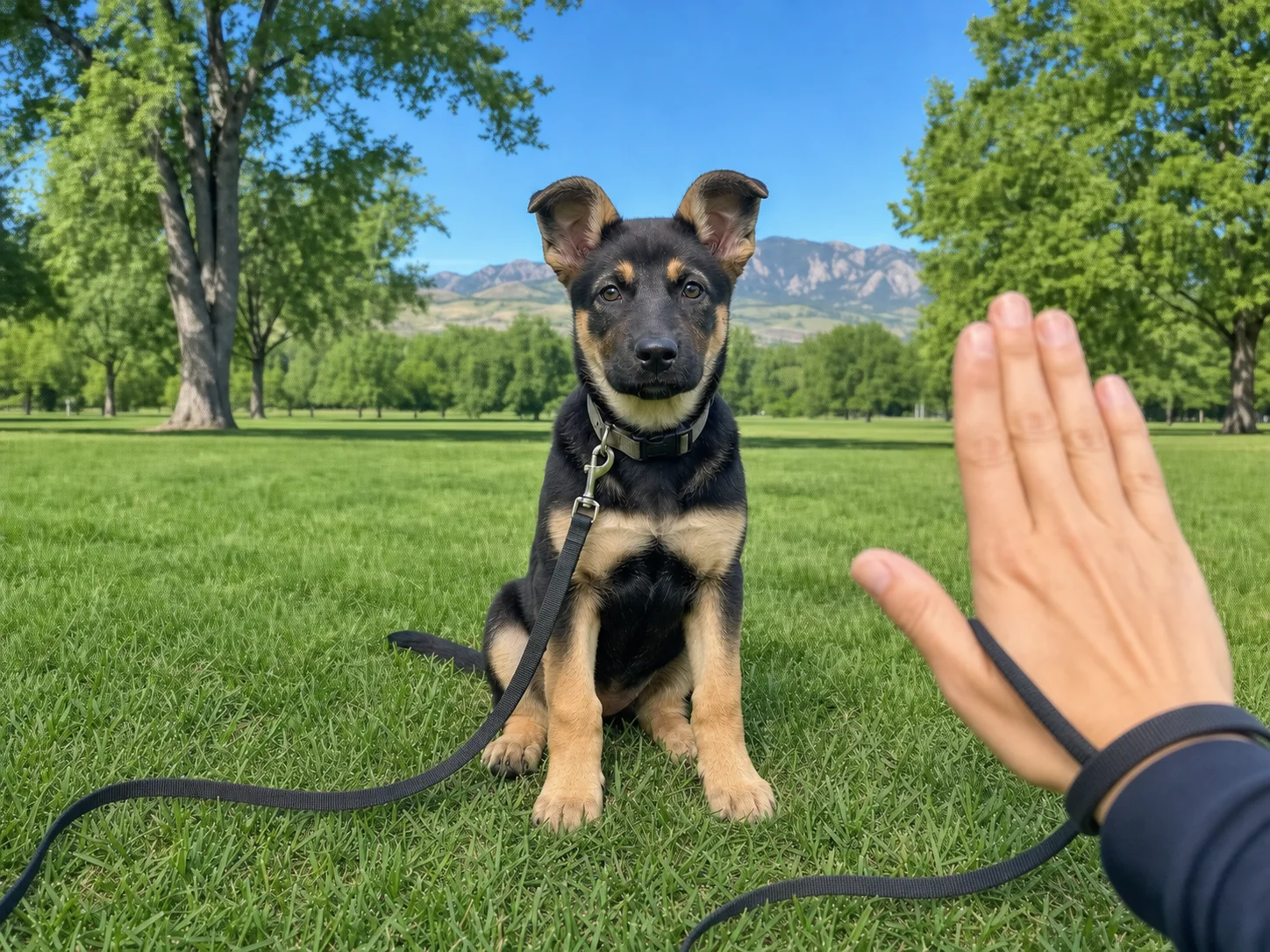
We work outdoors, in a park, in a small group. Every puppy gets time and attention, and every owner gets their own questions answered.
Each week builds on the last, and you leave with something specific to practice, just a few focused minutes a day.
Bring: a flat buckle collar or harness, a standard six-foot leash, and small soft treats your puppy loves. That's the whole kit.
Training here is gentle and reward-based. Flat collars, treats, and plenty of encouragement. No prong, choke or e-collars; puppies learn best when they feel safe.
The things you might be dealing with right now
Every one of these comes up in class, and every one of these is normal for a puppy.
Housetraining & potty training
Housetraining is a schedule question before it is a training question. We set up a routine your puppy's bladder can actually keep to, learn the signals your puppy is already giving you, and make a plan for the accidents that will still happen along the way. Gentle consistency gets you there. Puppies thrive on routine.
Crate training
A crate should be the place your puppy chooses to rest, not the place they get sent. We build that association in small steps (door open, good things inside, short stays before long ones) so the crate becomes a den rather than a punishment, and so you can leave the house without guilt.
Jumping on people
Jumping is a puppy asking to say hello at face height. We teach a friendlier default (four paws on the floor is what earns the attention) and we practice it with the doorway, the visitors and the excitement, because that is where it matters most.
Biting, nipping and mouthing
Sharp puppy teeth are completely normal. Puppies explore the world with their mouths. We will show you gentle ways to teach soft manners, give you a redirection that works in the moment, and help you both through the nippy weeks with patience to spare.
Chewing up furniture
Chewing is completely natural. Puppies need to chew, especially while they are teething. The work is making the right thing the most appealing option in the room, setting up the space while the habit forms, and helping the chair leg never become the interesting choice in the first place.
Barking
Barking is your dog's way of communicating. Rather than simply trying to stop the barking, we first identify what your dog is trying to say, whether they're seeking attention, reacting to something in the environment, feeling bored, or experiencing worry. Once we understand the cause, we teach a more appropriate way to communicate and consistently reward those calm, desirable behaviors.
Why the timing matters
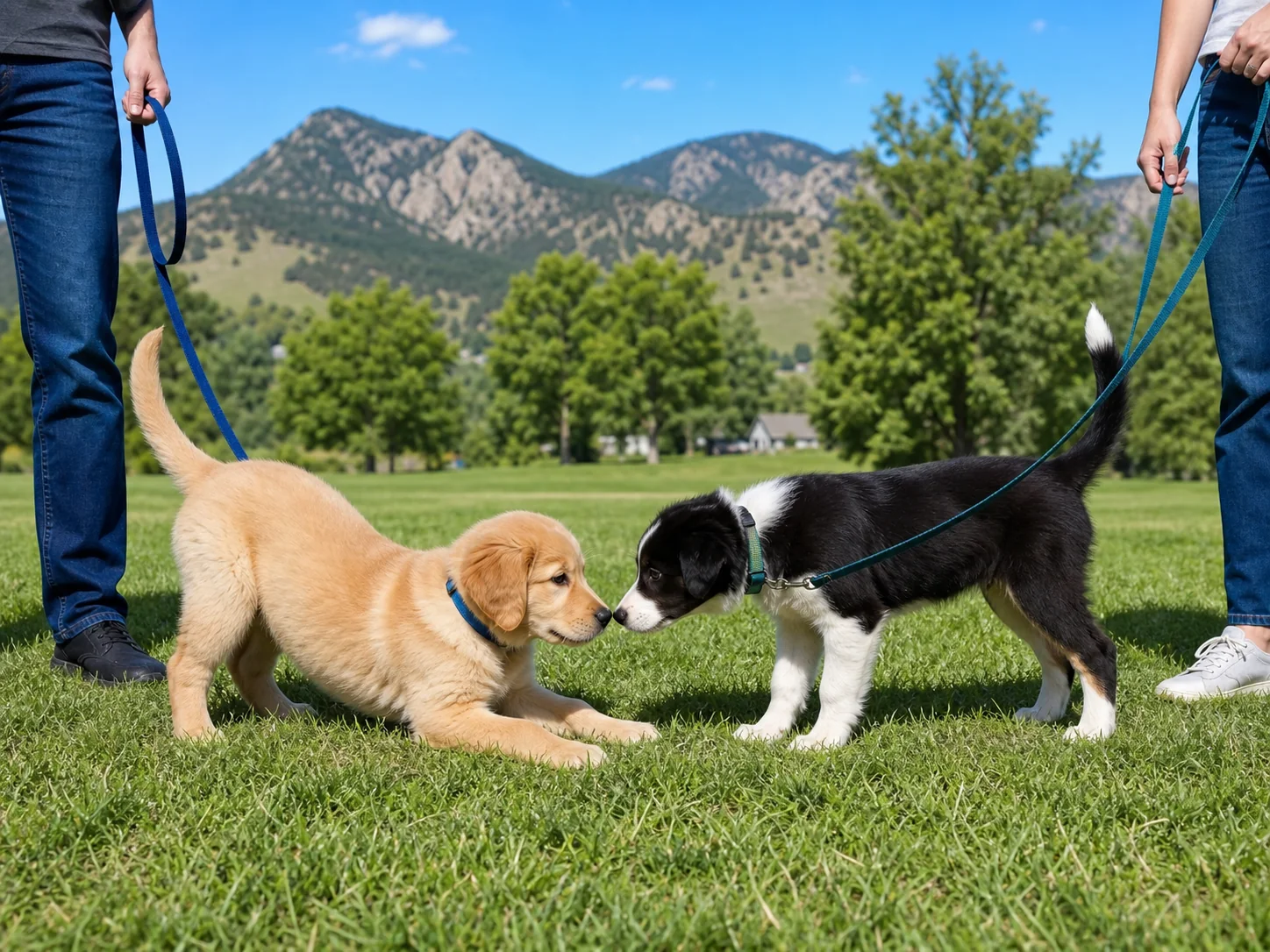
The earlier good habits start, the easier they are to build. Young puppies file new experiences away as normal with remarkable speed.
That said, puppies of all ages are welcome. Wherever your puppy is starting from, class meets you there.
Five-week Puppy Kindergarten
$225 $250
for the full course, 10% Grand Opening discount
- Five weekly 1-hour classes
- Deliberately small group, personal attention every week
- The full twelve-skill curriculum
- Practical answers for your puppy, in your home situation
- Something specific to practice between every class
How to join a class
-
Pick your class
Select from our available classes, provide your vaccinations and pet's information.
-
Reserve your spot
Classes are kept small on purpose. Places are held in the order people sign up.
-
Pay online before class starts
Payments processed through PocketSuite
Vaccinations: puppies need to be up to date on their shots for their age before joining a class.

Ready when you are
Register online in a few minutes, and if you have questions, Barbara is one call away.